


Welcome back to Lucid, and hello to all new subscribers. This coming week we have a Lucid double-header: a special Friday, April 3, 1-2pmET gathering to mark Lucid’s 5th anniversary, and our customary first week of the month Sunday evening gathering, April 5, 8-9pmET, with the historian of China Frank Dikötter as our guest.
Paying subscribers will receive the link to join these Zoom meetings three hours before the event. If you can’t attend, you will find the video at lucid.substack.com.
To allow more people to participate in these informative conversations, I am offering a discount of 30% for one year, good through April 5.
I am also offering a permanent 30% discount for educators and independent scholars, this offer is also good through April 5.
I will also be doing a Live on Monday, April 6 at 8pmET with messaging expert Anat Shenker-Osorio. We’ll talk about what protests really do in a society; the relation between protests and elections; and much more! To join, just download the Substack app, enable notifications, and look for the join link at 8pm from Ruth Ben-Ghiat.
_____________
Yesterday I spoke with David Pepper about the costs of the Trump administration’s recklessness in domestic as well as foreign affairs. We often think of authoritarian states as heavy-handed entities —and they are, with their transformations of institutions and government, and their censorship, brutality, and lies that affect individuals and communities.
Yet there is another side: what happens when those in power simply don’t care, when they create crises and then are absent, leaving populations alone to bear the consequences? Since such leaders see people only as assets to exploit, and have no empathy or sense of public welfare, disaster relief, social assistance, climate crisis mitigation —all a waste of funds and time.
The Trump administration cutting benefits and services for veterans is an example. To this way of thinking, where morals and a sense of duty and service are absent, veterans are people who served but are no longer useful. Why should the state help them out?
It is this unique mix of repression and uncaring that makes life hell under authoritarianism, as Americans are now discovering. And millions of them are protesting, and in time they will be joined by millions more.
This is a good transition to why autocrats need bunkers and the the relation between fear and the need to be at the center of attention 2/47.
My inbox is full of emails from journalists from all over the world, wanting me to answer one question: why does Trump feel he needs to put his name on coins, buildings, battleships, IPhones, and other objects? TIME magazine published a list of those things, but being five days old, the article is probably incomplete….
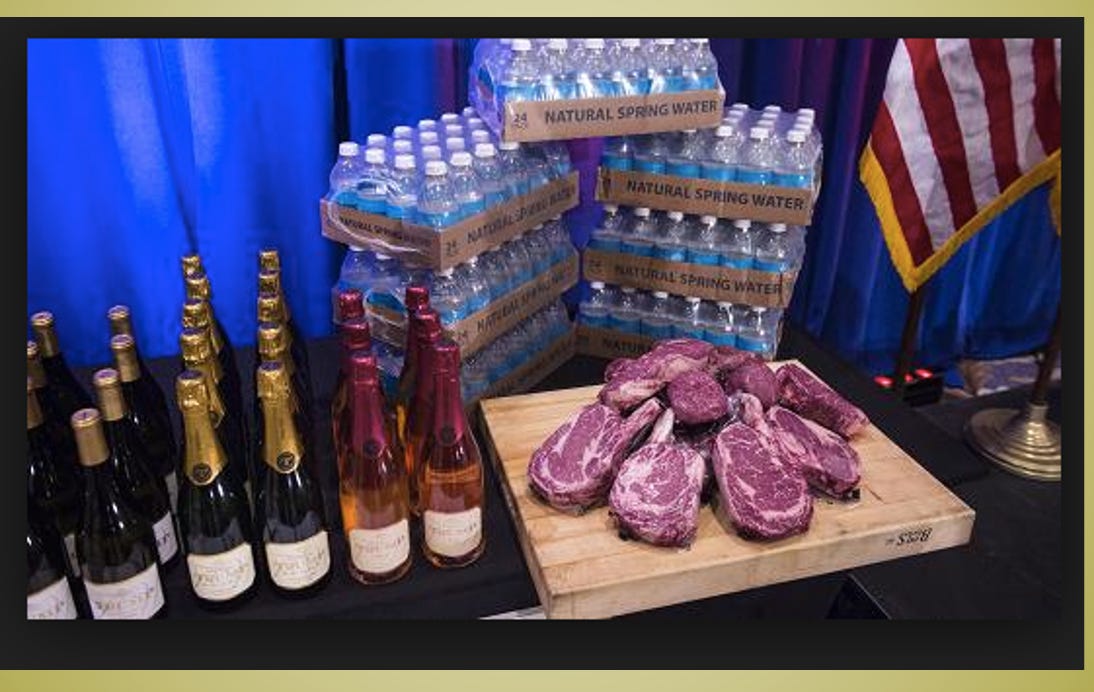
Trump came into politics with an array of products —Trump wine, Trump water, Trump steaks— and used them during his 2016 campaign to play up his difference from career elected officials. Since he truly does not recognize the idea of conflicts of interest, why should he stop marketing himself just because he became president?
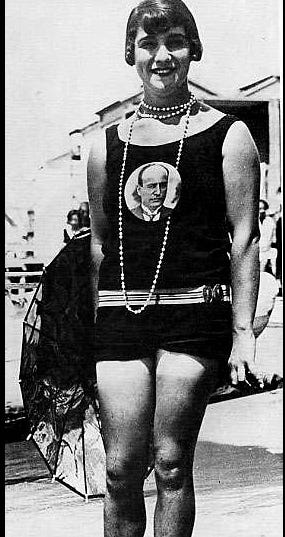
Yet putting your name on everything is also what dictators do. Personality cults have rules and a main one is that the leader must be omnipotent and omnipresent. Whether it is his face on buildings and currency, or places and objects named after him (there was a town in Sardegna during Fascism called Mussolinia, and his face adorned bathing suits) he must be an everywhere and unforgettable.
But here’s the kicker: when such “strongmen” realize their weakness is becoming more apparent, their misguided and ignorant policies are backfiring, and their malfeasance is unpopular, it triggers the intense fear they all have of people hating them, turning against them, conspiring to take them down.
It’s then that they start firing their officials, blaming them for their failures. It is then, too, that such a leader might just feel the compulsion to announce in public that his beloved ballroom —which is an extension of his ego, his need to recreate the world in his own image— will have a “massive” military complex underneath it. Meaning the ballroom is a very expensive front for an exit strategy: a place to hide when the disasters he is provoking every day come to pass.
Every dictator broods about such scenarios. Gaddafi was terrified he would end up like Hussein, who was pulled from a hole in the ground, and Putin was terrified at the bloody end of Gaddafi (who, in the end, was pulled from a hole in the ground). This is likely why Putin disappeared from view, into one of his hiding places, after Khamenei was killed.
Now Trump will have his very own bunker, one he will feel safe in because he constructed it, and he is telling us that when the apocalypse he is provoking comes, or the MAGA-cap wearing masses turn on him, he will be safe from everyone. Like all autocrats, Trump is ruled by fear: it fuels his manic posting and his activities of domination and accumulation. Yet he will never be free of it. It will plague him until the end.


