
Ada Gobetti, Anti-Fascist
Joyce Vance and I will have a Live about resistance tomorrow at 9:30amET

This essay is part of an occasional series on democratic heroes past and present. It honors individuals who have stood up to the forces of corruption and violence and told the truth at great personal cost.
Here are two essays I have written so far, on Giacomo Matteotti and Alexei Navalny.


Ada Gobetti, Anti-Fascist
We don’t hear as much about women who resisted the Fascist dictatorship. This essay aims to correct that, with the example of Ada Gobetti. Her story shows that resistance does not just operate in the present, but creates space for a different national future. Out of resistance movements come leaders who guide the journey to freedom and reinforce democratic values after the tyrant is finally gone. Ada was one of these leaders, and her activities deserve to be better known.
Ada’s life was marked by Fascist brutality early on. When she was twenty-one, she married the journalist Piero Gobetti, who published the anti-Fascist journal The Liberal Revolution (1922-1925). Their home became a center of strategy and action, making them targets of Mussolini’s government.
“Make Gobetti’s life difficult,” Mussolini told his officials after he declared dictatorship in 1925, leading to a new round of beatings by Fascist thugs from which Piero Gobetti never recovered. He died in exile in 1926, the year political parties and publications associated with them were banned, leaving Ada a widow with a small child.
As the regime cracked down on anti-fascists, putting them in prison or forcing them to emigrate, Ada pivoted to a different form of resistance to be able to stay in Italy. She worked as a teacher, and translated English-language authors into Italian to keep her compatriots’ cultural horizons open, an activity that became more crucial in the late 1930s as the regime pursued one war after another and imposed cultural and economic autarchy.
During these long years of repression, Ada sought to maintain contact with other anti-Fascists, so that when the time came for renewed action trusted relationships would be intact. The size of Mussolini’s secret police, and the regime’s extensive civilian informer networks, made this very risky.
The moment for the revival of anti-Fascism came during World War II, when Allied bombings and heavy Italian losses turned some Italians against the regime. In 1942, Ada was among the founders of the Action Party, whose principles honored Piero Gobetti’s contribution to anti-Fascist thought.
Armed Resistance began in the fall of 1943, after Mussolini had been removed from power by his own Grand Council and Italy surrendered to the Allies. Adolf Hitler then had Mussolini rescued and set up as the head of a Nazi puppet state in northern Italy, this invasion sparking a grassroots liberation movement.
Ada coordinated actions among partisan brigades and built a network of safe houses. She also organized Italian women to assist the Resistance in myriad ways, including through a clandestine women’s newspaper.
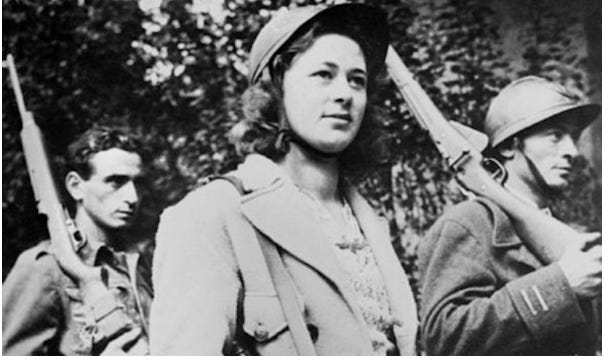
As would be the case in future regimes, the years of maximum risk and repression formed those who would oversee the transition to democracy. In 1945, Ada became the first woman to serve as deputy mayor of Turin, and she co-founded the Women’s International Democratic Federation to support democratic values and female activism in Europe.
During this period, she reflected in her diary that the most profound contribution of the Italian resistance was its revival of “a bond of solidarity, founded not on a community of blood, country, or intellectual tradition, but on a simple human relationship, the feeling of being at one with many.”
Ada managed to survive over two decades of dictatorship as an anti-Fascist because she possessed the pragmatism that marks the most effective resisters, who understand that when one avenue of opposition is no longer viable, it’s time to find another. Like many resisters, she lived intensely in the present, striking back at the strongman any way possible, but she also worked to let Italians imagine a different future for Italy, a future of freedom from tyranny.
Ada considered herself an ordinary person who was living through an extraordinary historical moment, but her courage inspired others to do things they never thought were possible. History may be changed by collective action, but that collective is composed of individuals who decide one day to come forward to model the values they want to see in the world.
Just beautiful. Thank you.
An inspiring and beautifully written essay. I’d like to know more about Ada Gobetti, particularly how she sustained her principles and pragmatically survived over the two decades (or more) of anti-fascist activism.