
Why We Resist
For the Country, For Each Other, For Ourselves, for the World

“The only thing we should fear is that we will surrender our homeland to be plundered by a gang of liars, thieves, and hypocrites. That we will surrender, without a fight, voluntarily, our own future and that of our children.”
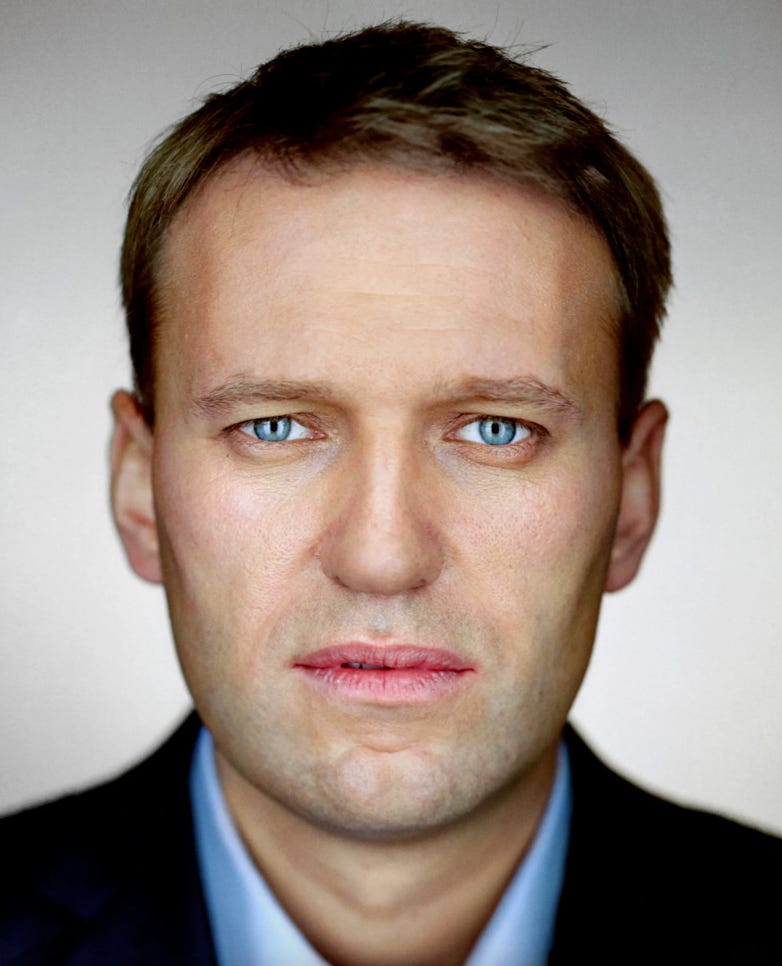
Russian dissident Alexei Navalny wrote these words in his prison diary on Jan. 17, 2022. He was one year into a confinement for invented charges of fraud, embezzlement, and extremism that would take him to the Polar Wolf maximum security penal colony in Siberia in 2023, and to the grave in 2024.
Navalny’s resistance took place in Russia. He could have stayed abroad when he went to Germany in 2020 for treatment after the Vladimir Putin regime had poisoned him. But his sense of duty as a Christian and a conservative nationalist led him to reject the idea of going into exile. “I have my country and my convictions. I don’t want to give up my country or betray it.” He was arrested at the airport in Moscow as soon as his flight landed when he returned in 2021.
Navalny resisted out of love of nation, to improve the fates of others, and to honor his personal set of values. Those reasons recur throughout the history of anti-authoritarian action, and those in the United States who are thinking about what they can do in the face of the loss of freedoms can start by examining how they can model the values they want to see in the world, whether it is solidarity, justice, equality or something else.
We can also think about how we can be most effective, reviewing our personal skill set and talents and the level at which we want to intervene. Are you a community-oriented person? Could you step forth and take a role in your faith, business, sports, or other communities? Can you speak or act effectively at the state level? Have you thought about running for office or working to register people to vote? Are you a facilitator and persuader who can connect with those anchored in the MAGA world?
Everyone will have their own way of resisting, but at a time when authoritarians seek to remove values and ethics from politics, rewarding amoral pragmatism and nihilism, we can lead with values and talk about values and let those principles guide the choices we make in our public and private lives.
Navalny was threatening to the Putin regime because he resisted in many ways, for many years. He knew that authoritarianism depends on lies and secrecy, and that autocrats fear the truth. So he resisted on behalf of the truth. His exposure of Putin’s corruption was designed to “do what they fear – tell the truth, spread the truth. This is the most powerful weapon against this regime of liars, thieves, and hypocrites. Everyone has this weapon. So make use of it.”
He used videos, social media, and his speeches at multiple sentencings to testify to the corruption and expose Putin’s lies to the world.
Resisters know that our votes are our voices, and our voices can change the world. Many dissenters have focused on protecting free and fair elections and getting people to register to vote. As Putin destroyed free and fair elections in Russia, Navalny also ran for office and mentored others to do the same at the local level.
He also inspired people to get involved in civic action. Kira Sokolova, a teacher from Chelyabinsk, near the Ural Mountains, watched the massive 2011 protests in Russia against Putin’s election fraud on television, and read online about Navalny’s foundation. She joined his movement, became an election monitor and in May 2012 traveled 34 hours to Moscow to attend the “March of Millions” held just before Putin’s 2012 inauguration. In an interview, she said she had become politically active because she was sick of the lying and “vileness” and longed for a return to “normal human values.”
We in the United States are witnessing a spectacle of institutionalized lying and vileness and incompetence and sabotage of our beloved country’s prosperity and well-being. We can tell others what is happening, and encourage them to see voting as a remedy and a peaceful and democratic way of removing those who are harming us.
Resilience is key to effective resistance, as is maintaining hope. Dissenters play a long game. This can be dispiriting to people who see their liberties disappearing now, but the lesson of anti-authoritarian action around the world is: use the freedoms you have when you have them, and expect setbacks. Do what you can in the spaces you have, and perhaps those spaces for democratic action will become bigger as more people come aboard. Collective action and solidarity are key to feeling you can continue and your efforts have a larger meaning.
Navalny had already been through a lot when he was sent to prison in 2021. He had received a “warning” dose of poison while in prison during the 2019 anti-government protests, and he had spent over 3 months total in prisons and penal colonies in 2017-2018 on fabricated charges of financial crime. He and his collaborators were constantly targeted and detained, and his foundation labeled an extremist entity and foreign influence vehicle.
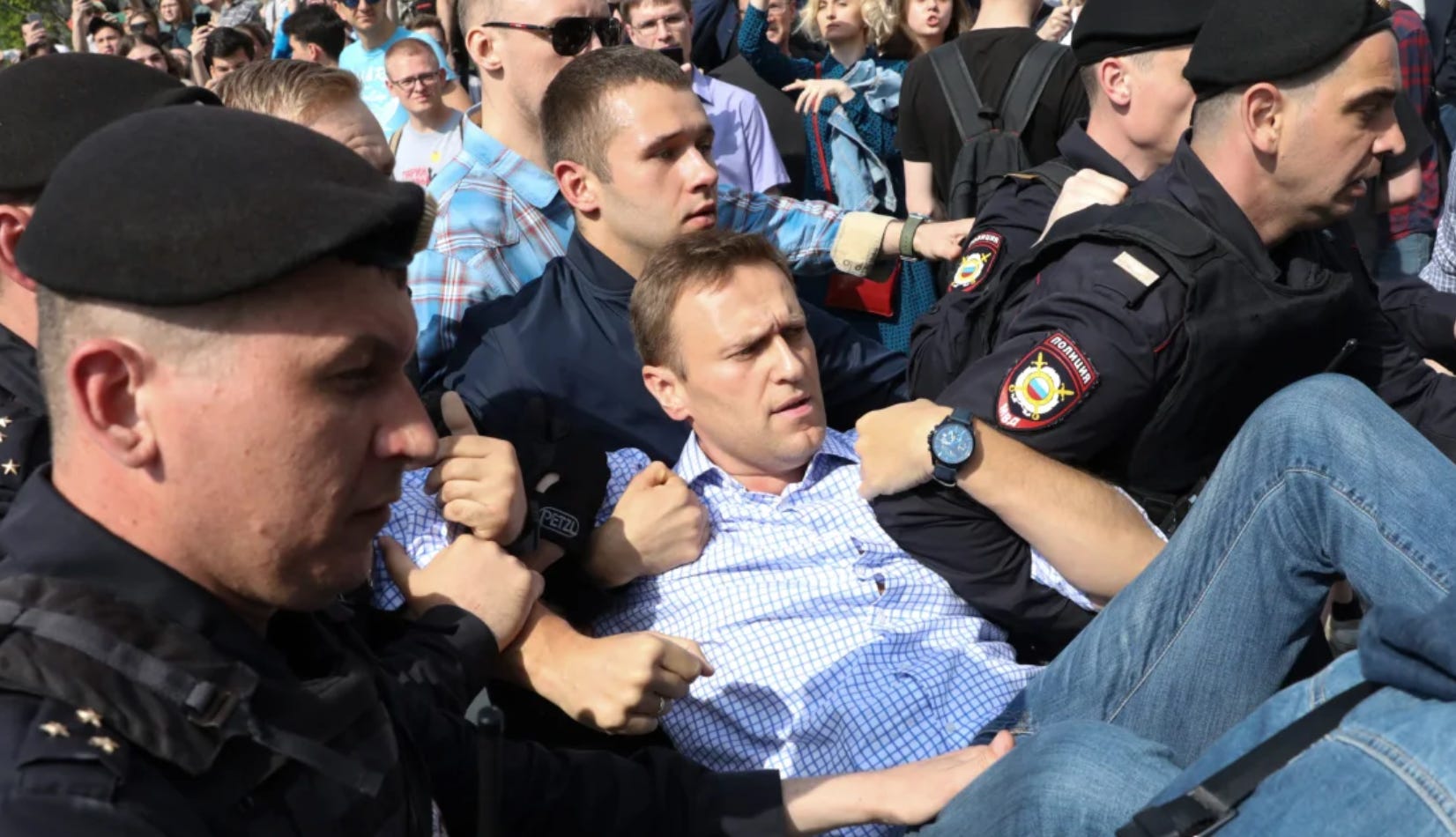
His prison diaries suggest a tenacity that is possible when one possesses resilience, but also hope – hope that your efforts will make a difference, and belief that they can. “I am trying to do everything I can from here to put an end to authoritarianism (or, more modestly, to contribute to ending it),” he wrote from prison in March 2022, as his country invaded Ukraine and the violence and corruption of the Putin kleptocracy took center stage.
“Every single day, I ponder how to act more effectively, what constructive advice to give my colleagues who are still at liberty, where the regime’s greatest vulnerabilities lie,” he wrote in that entry. As more people are silenced and disappear in America, acting and speaking strategically will be even more important.
He never underestimated Putin –his prison diaries emphasize how long-lasting and durable such regimes can be—but he also never underestimated or dismissed the Russian people, and he worked with many young people who represented the future. A February 2021 Levada poll, conducted soon after Navalny’s arrest, found Putin’s approval rating unchanged –except among Russians aged 18-24: 48% of them felt that the country was going in the wrong direction.
“There are plenty of us, certainly more than corrupt judges, lying propagandists, and Kremlin crooks,” Navalny wrote in Jan 2023. “I’m not going to surrender my country to them, and I believe that the darkness will eventually yield. But as long as it persists I will do all I can, try to do what is right, and urge everyone not to abandon hope. Russia will be happy!”
We in America have a window to respond to a call from action that, to be most effective, must come from within. As we think about why we resist, the direction and method and focus of our resistance will become clearer to us. Saving our country from the Donald Trump-Elon Musk authoritarian state will require mass mobilization and collective action, but the ways we resist will be individual and tailored to our own ethical code and temperament.
One aim can guide and unite us, though: that we not “surrender, without a fight, voluntarily, our own future and that of our children.”
“You are not allowed to give up.“
— Alexy Navalny
We each will resist In small and large ways. Perhaps even small deeds like holding a sign at a rally or writing to officials as often as possible and encouraging others to to do so become large deeds when they are stitched together.
It is discouraging but understandable that Tim Snyder, his wife and Jason Stanley have moved to Toronto. Hopefully Tim will continue to be an inspiring voice from abroad.