
"ICE=Gestapo": Tracking the Memory of Fascism at the Olympics in Italy
When a neo-Fascist is Prime Minister, it's easier to associate state forces who terrorize citizens with Nazis rather than Italians

Welcome back to Lucid, and hello to all new subscribers. Our next Q&A will take place on Friday, February 13, 1-2pmET. Paying subscribers will receive a link at 10amET on Friday to register for the Zoom gathering. If you can’t attend, you can find the video at lucid.substack.com. I’m looking forward to seeing everyone.
Our guests will be Jonathan Becker and Yael Bromberg, co-editors of the new book Youth Voting Rights, which is about the fight for American democracy on college campuses around the nation and youth participation in elections.
Becker is professor of political studies, vice president for academic affairs and director of the Center for Civic Engagement at Bard College. Bromberg is a constitutional rights litigator, a leading legal scholar of the Twenty-Sixth Amendment, and election law professor at American University Washington College of Law.
If you’d like to join these informative conversations, you can sign up for paid or upgrade to paying here:
______
“ICE Only In the Spritz!” read one sign in Milan that evoked the classic Italian cocktail as hundreds of people protesting the deployment of U.S. ICE agents during the Winter Olympics, which Italy is hosting in Cortina d’Ampezzo. The protesters gathered at the Piazza XXV Aprile, named for the date Italy was officially liberated from Fascist rule and Nazi occupation. 1000 Milanese students held their own demonstration in a different location. All of them are objecting to the presence in Italy of members of an American agency that has become infamous for its brutal and thuggish behavior.
No matter that these ICE agents are not roaming the streets of Milan, ready to bust heads of protesters and kill legal observers as they have been doing in America. “They are not welcome,” stated Giuseppe Sala, the Mayor of Milan, describing ICE as “the militia that kills.” His sentiments are shared by the Italian Senator Carlo Calenda, who called the U.S. agents “delinquents and assassins” and compared them to the Nazi SS, and by protesters carrying signs that read “ICE=Gestapo.”
The protests constitute yet another sign of a new level of foreign hostility to America that President Donald Trump’s administration has created. Yet I also see the Italian protests against ICE as an opportunity to explore the memory of Fascism in Italy.
I’ve been struck by how Italians are choosing to use Nazism, not Italian Fascism, as the referent for armed squads marauding in public. The memory of Nazi brutality remains in Milan, which was among the cities that were invaded by the Nazis in the fall of 1943, after Mussolini was removed by his Fascist Grand Council and Italy surrendered to the Allies. Hitler installed Mussolini at the head of a Nazi puppet state headquartered in Salò, and a civil war started: Europe’s largest resistance movement versus the Italian Fascists who were allied with the Nazis and jointly terrorized the population.
Yet Milan was the birthplace of Fascism. It was where Mussolini announced the creation of the Fascist movement in 1919. It was also the birthplace of the first blackshirt squad, which developed out of Mussolini’s personal bodyguard, and the site of Mussolini’s headquarters, known as Il Covo (the Den, or Hideout). He kept a flag over his desk that depicted a skull with a Fascist dagger in its mouth. Fascism stood for violence as a way of moving history forward. It stood for death as necessary for the redemption of the country.
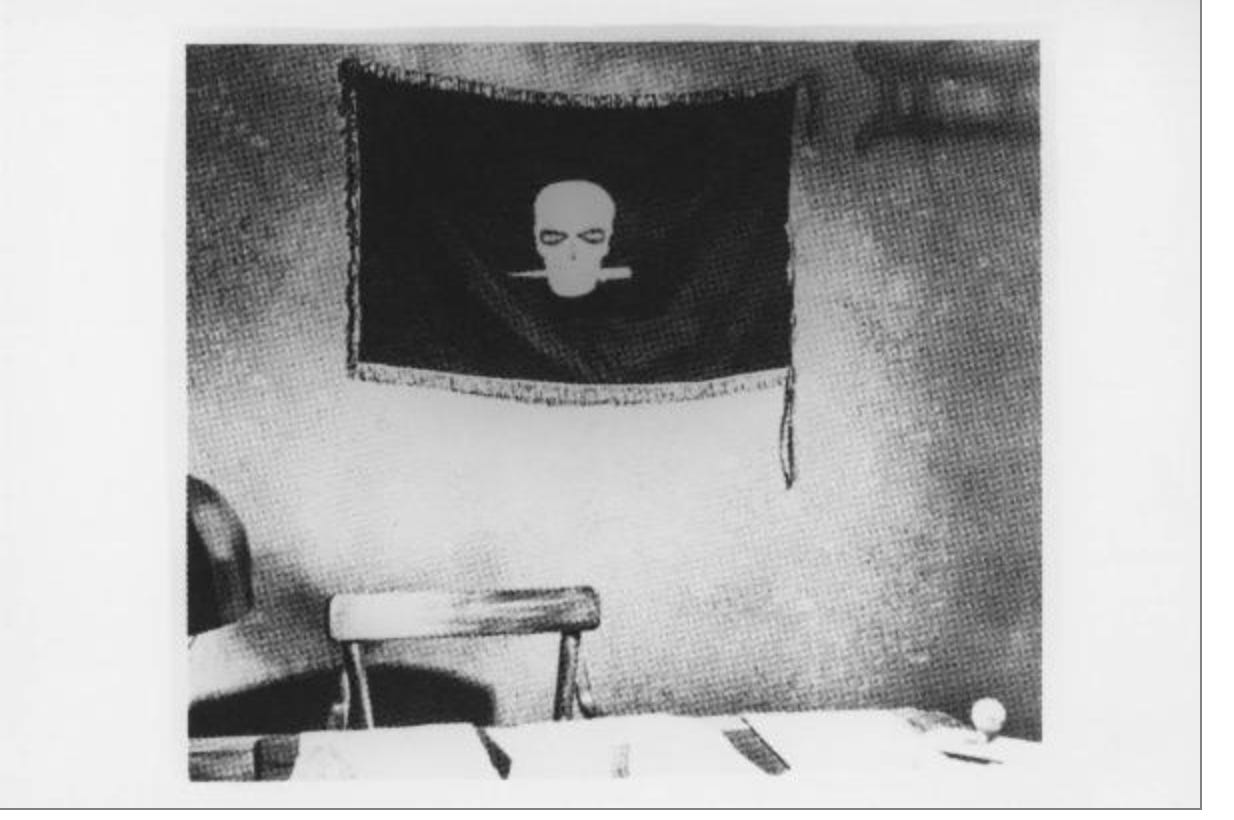
So, Italians, and especially Milan’s political class, have another reference point, a national reference point, for ICE-type behaviors. And they are choosing to avoid it. With a bellicose former neo-Fascist militant in office, and Italy in the spotlight as the host of the Olympics, it’s easier to evoke a foreign Fascism rather than open the Pandora’s box of home-grown Fascism.
I wrote in a recent Lucid essay on public violence that the behavior of ICE and CBP agents reminds me of the gangs of Fascist blackshirts who sowed terror in Italy.

They arrived in trucks, armed with clubs, knives, guns, and castor oil, to subjugate towns and attack leftists and liberals, including noncompliant priests, in the early 1920s. After the 1922 March on Rome and Mussolini’s invitation by the King to become Prime Minister, Mussolini organized these squadrists into a Militia under his personal control, since the King controlled the Armed Forces.
Once Il Duce declared dictatorship in 1925, blackshirts who had committed acts of theft, arson, murder, and rape were pardoned en masse so they could act as his personal thug brigade inside Italy. They fought in Fascism’s imperialist wars, alongside the Armed Forces and their Nazi allies, committing many atrocities and war crimes. Their rituals, such as the Fascist salute, often accompanied by a shout of “Present!” inspired generations of neo-Fascists, including members of the neo-Fascist Movimento Sociale Italiano party, and its youth organization, which the young militant Giorgia Meloni used to lead.
The election of the neo-Fascist Giorgia Meloni as Prime Minister was made possible because of a normalization of the Italian regime that started with Silvio Berlusconi’s governments (1994 and two terms in the early 2000s). Berlusconi not only brought neo-Fascists into government as part of his coalition, breaking taboos in Europe, but also rehabilitated the figure of Il Duce with comments like “Mussolini never killed anyone.” Meloni was part of this as a Minister of Youth during Berlusconi’s last term.
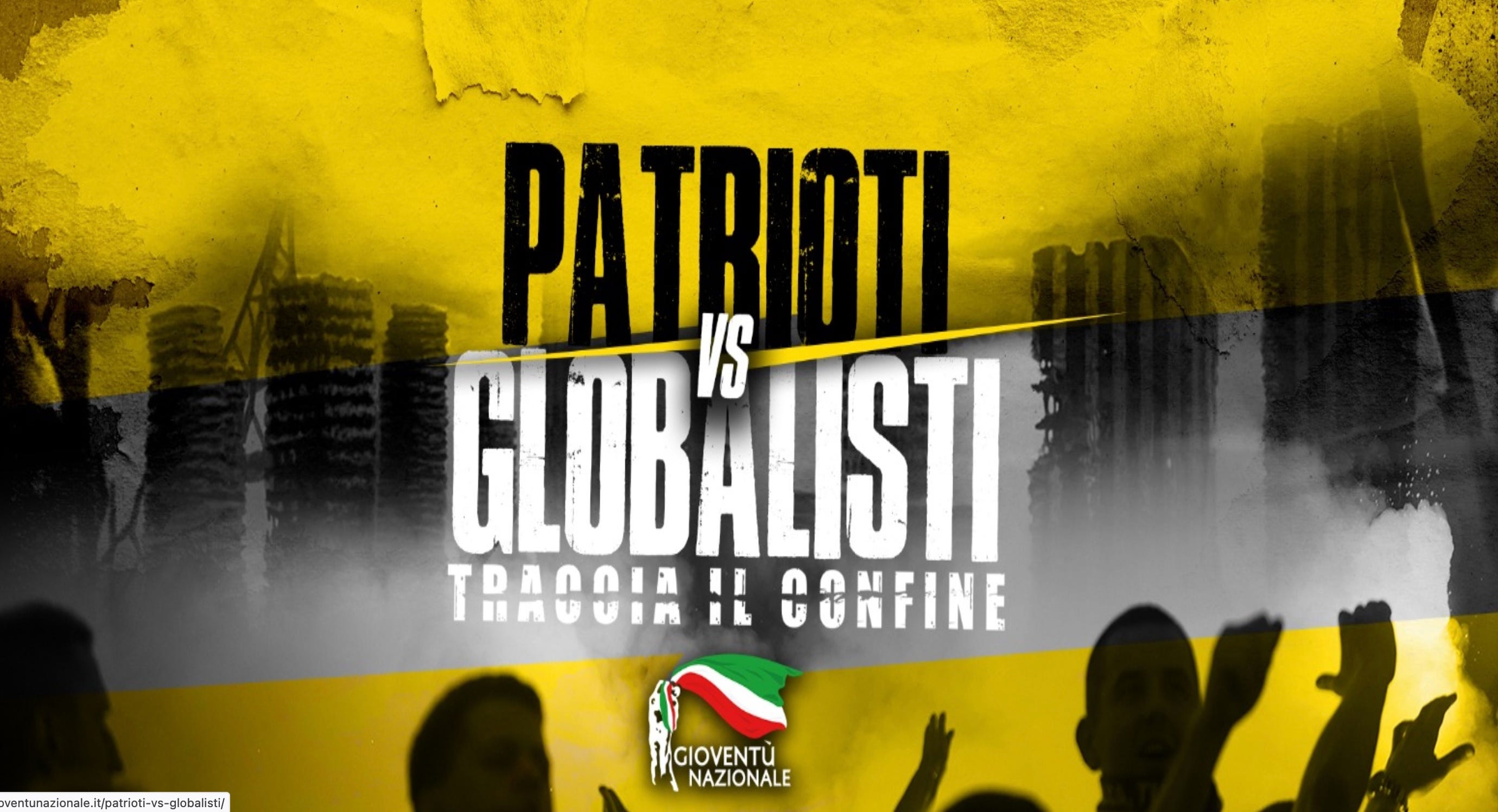
The rehabilitation operation continued with the Brothers of Italy party that Meloni co-founded in 2012. The official neo-Fascist party, Alleanza Nazionale, had become too establishment, even fusing temporarily with Berlusconi’s Forza Italia party in 2009, so an autonomous radical right party was needed. The Brothers of Italy slogan, “God, Fatherhood, Family,” dates back to the years of the dictatorship. The party’s messaging intended for a new cohort of young militants winks at historic Fascist rituals such as the salute, as in this image from 2021, the year before Meloni took office.
Meloni markets herself abroad as a moderate and has supported Ukraine in its fight to resist Russian occupation. But at home she has been unwilling to denounce those who show public sympathy with the Fascist past. In particular, she has refused to condemn the mass public Fascist salutes by hundreds of men in black shirts during the yearly commemoration of the 1978 killings of three neo-Fascist militants at Acca Larentia. Some shout “present” as they salute, as if Mussolini were still alive.

There has been a debate in the Italian press about whether performing such salutes constitutes a criminal act. The 1993 Mancini law forbade the dissemination of Fascist propaganda and the public display of Fascist flags and symbols, but judicial outcomes for those who salute in public have been mixed. Some who hail Il Duce in this manner have been convicted, while others have paid no penalty. In this way, Italy is very different from Germany.
Given her neo-Fascist credentials, Meloni could achieve a tacit or formal ban of this practice, but instead she has reacted angrily to proposals by the Democratic Party to ban salutes and neo-Fascist groups in Italy, dismissing any concerns about the public display of sympathies for Fascism as “gratuitous attacks and exploitative controversies.” It is easier to make Nazis the universal reference in Italy for militia-type brutality than alienate her base.
I will continue to track the ways that historic dictatorships are being rehabilitated and their ideals and rituals normalized, both by transnational operatives of the far right (such as Elon Musk and Steve Bannon with the Nazi salutes they perform in America), and by apologists and supporters in countries where those tyrannies flourished.
What we call things matters, and what we don’t say matters as well. When Italians label ICE agents Nazis rather than Fascists, even though they had a Fascist dictatorship that lasted longer than Nazism, it is a symptom of Italy’s unfinished reckoning with its Fascist past.
This is so important to point out because history is repeating itself.
That was a great read. Thank you for all the work you do