
Corruption and Authoritarianism
From the Nazis onward, corruption has been key to sustaining authoritarian regimes

Corruption is in the news, and as predicted in this Feb. post, corruption has become a defining feature of the Trump-Musk administration.

Deciphering corruption as a feature rather than a bug of authoritarianism has been a Lucid priority. Here, for new subscribers, is my very first essay, “Drain the Swamp,” on Benito Mussolini, Vladimir Putin, and Donald Trump’s “efficiency” campaigns,

And here is my recent essay on the moral collapse we are living through in America.

Today’s essay lays out the basics of corruption and how authoritarians from Adolf Hitler onward have institutionalized it in government and society. I use the Nazis as my case study because with the focus so often on the Third Reich’s propaganda machine and its racism and genocide, the corruption that sustained all of this does not receive adequate coverage.
Corruption: The Central Pillar of Authoritarianism
Often defined as the abuse of public power for private gain, corruption involves a broad number of policies and practices. They encompass bribery, disregard for conflicts of interest, plunder of state resources, raids on businesses using criminal methods, sham audits or investigations, profiting from privatization or nationalization, and laws that facilitate or decriminalize wrongdoing.
Corruption is key to authoritarianism because for strongmen, public office has nothing to do with public service: rather, it is a vehicle for private enrichment, as well as escaping prosecution for crimes. They use corruption in tandem with violence, propaganda, and other tools of rule. Purges of the judiciary result in a justice system that exonerates crooks or doesn’t prosecute them at all. Journalists and activists who might expose thievery are imprisoned or smeared through propaganda. Virility makes taking what you want, and getting away with it, into the measure of manhood.
Authoritarians also create new patronage systems that offer jobs and opportunities for wealth, which help to overcome any moral hesitations some might have about collaborating. The core of the contract between the ruler and his enablers is the offer of power and economic gain in exchange for supporting his violent actions and his suppression of civil rights.
To this end, authoritarians use a divide and rule strategy that involves buying off opponents, whether individuals or institutions such as the military (as in Venezuela and Myanmar) by including them in corrupt schemes.
Corruption is a process as well as a set of practices, and the word’s Latin and Old French origins imply a change of state due to decay. This notion of corruption captures the operation of strongmen regimes. They don’t just turn the economy into an instrument of leader wealth creation, but also encourage changes in ethical and behavioral norms to make things that were illegal or immoral appear acceptable, whether election fraud, lying to the public, torture, or sexual assault.
Rulers who come into office with a criminal record (Mussolini, Adolf Hitler, and Trump) have a head start. They know that making the government a refuge for criminals who don’t have to learn to be lawless hastens the “contagion effect.” So does granting amnesties and pardons, which indebt individuals to the leader and make blackmailers, war criminals, and murderers available for service.

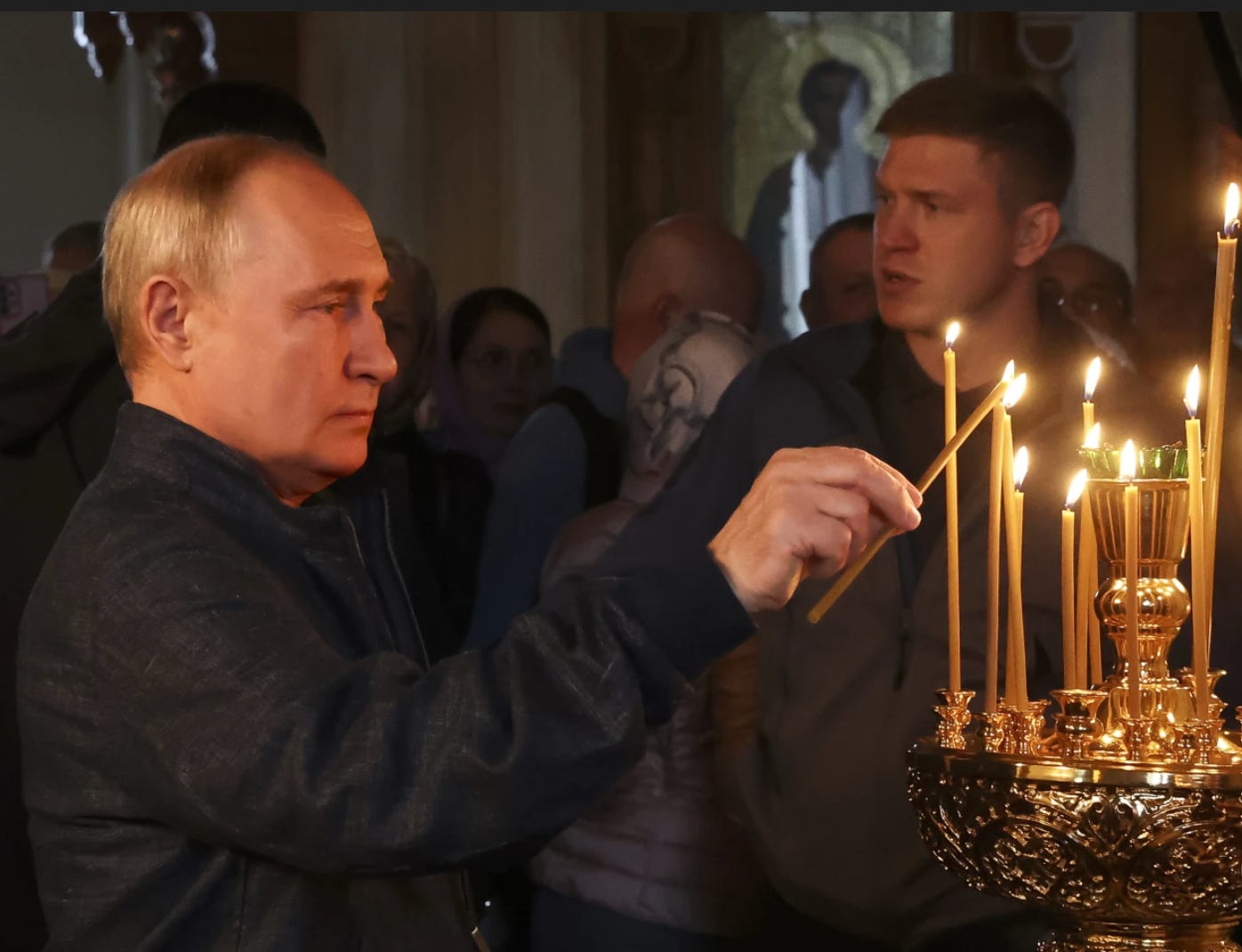
Personality cults are key to normalizing corruption. They present the leader as a selfless fighter on behalf of the people, and religious elites collude by proclaiming that he was placed in office by divine mandate. The more corrupt the leader becomes, the harder they work to maintain an aura of holiness around him.
Nazi Corruption
The cult of Hitler is a good example. “Yes, if Hitler could do everything himself, some things would be different. But he can’t keep watch over everything.” So read a 1935 police report from Bavaria about popular resentment as accounts of embezzlement, fraud, and other crimes by Nazi Party bosses circulated. The Führer had long crafted his image as a virtuous man, and his abstemious habits as a leader (he was a vegetarian, didn’t drink or smoke, and kept his girlfriend Eva Braun in the shadows) bolstered his purist credentials.
“I am probably the only statesman in the world who does not have a bank account,” he told Krupp factory workers in Essen in 1936. “I have no stocks or shares in any company.” To keep up this anti-materialist profile, he declined to draw a salary, even as he earned millions of Reichsmarks in Mein Kampf royalties, speaking fees, and gifts from admirers. His Presidential funds were exempt from any accounting procedures, and he ordered the Gestapo to destroy his tax records to hide evidence that he never paid any taxes.
The administrative structure of the Nazi state favored the distancing of Hitler from corrupt activities but made for inefficient governance. The Führer gave his ministers authority to build their own fiefdoms, so bureaucracies and agencies proliferated, producing “the biggest confusion in government that has ever existed in a civilized state,” as former Nazi press chief Otto Dietrich later charged. That way others could be blamed for the leader’s mistakes.
Material rewards compensated for any frustrations. Hitler kept his cabinet officials close with secret stipends and bonuses that doubled their tax-free salaries, and his lax oversight permitted abuses. Taxpayers supported Nazi official Hermann Göring’s collecting and remodeling of multiple residences, including a castle. Cabinet officials built their own chains of corruption, often hiring those with handy criminal skills. Anton Karl, convicted for theft and embezzlement during the Weimar Republic, became head of the Labor Front’s construction department, known for his skillful use of bribery to gain contracts.
To co-opt Germans, the regime linked benefits for the included to punishments for the excluded. A 1933 law that cost thousands of leftist and Jewish civil servants their jobs twinned with another erasing debt for everyone else. A second debt eradication law in 1938, the year of full employment and the Kristallnacht pogrom, helped Germans to accept the “Aryanization” of the economy through boycotts, forced sales, and expropriations of Jewish businesses.
Industrialists like Fritz Thyssen benefitted most from the ongoing capital concentration in banking and other sectors, but Regional Economic Offices got a 10% cut of the purchase price of Jewish firms, and “unofficial commissions” to bureaucrats were not uncommon. These buy-off practices, together with his personality cult, meant that even when violence escalated into mass murder, Hitler remained, for many, a “Führer without sin.”
Hitler’s reputation for efficiency and good governance would live on among his admirers, who apparently include the two current leaders of the United States. According to journalist Michael C. Bender, in 2018 Trump told his former Chief of Staff General John Kelly that Hitler “did some good things,” while unelected co-leader Elon Musk rendered homage to the cult of Hitler in Jan. 2025 by performing what far-right extremists on social media followers interpreted as a Nazi salute.
All the more reason to focus on the corruption that was the sordid reality of this and other authoritarian regimes. A century later, corruption is still at the heart of authoritarianism, and leads people to collaborate with systems of repressive rule.
Reading about Hitler's corruption makes me think that 47 is doing his best to follow in Hitler's footsteps. I would not be surprised to see attempted eradication of trans people. In accepting the "gift" from Qatar, trump's attitude seems like a rebellious teenage boy, just daring anyone to stop him from doing whatever he wants.
Professor Ruth Ben-Ghiat: The Flying Golden-Hotel from Qatar is so unbelievable, I have to pinch myself to think this is not some poor-taste Chevy Chase Comedy.
Unbelievable.
The New York Times documented very well that The Donald LOST big chunks of Fred's Fortunes during a long decade from the mid-80s well into the 1990s, GET THIS -- according to the NYT, EVERYONE ELSE in NYC was prospering.
So, The Donald -- whose Dad recorded a salary for him when The Donald was TWO YEARS OLD, has to have the Presidency, for how else would he restock Fred's fortune?
The Donald has to think of his Golden Years (already starting with the face coloring) and Ivanka and the cute little Aryan-Racist sons.
The Hitler cult sounds like the "Aryans" made the Monster out to be a Trappist Monk -- "chaste" and detached from everything.
Thyssen is DELICIOUSLY portrayed in "Babylon Berlin".
"Babylon Berlin" depicts the Playboy Thyssen (transparently renamed, "Nyssen") as having played the October 1929 Markets and won fortunes through Short Sales (in German, appropriately called, "Leerverkäufe" -- literally, "Empty Sales" -- very accurate).
(The depictions are even more delicious. I just LOVE the Black Widow (Swetlana Sorokina) played sumptuously and enthusiastically by Severija Janušauskaitė.
The Nightclub scenes to Ms. Sorokina's song are RICH.
The Black-Widow scenes of Ms. Sorokina are deliciously EVIL.
The Swetlana Sorokina character is very reminiscent of Natasha, in the series of Boris Badenov with Rocky and Bulwinkle.
Sorry.
But it is kind of analogous to what Professor Ruth Ben-Ghiat writes of today.
I am surprised that there isn't more S-* - X to entice us with the current scandals. Money, insider-trading, bribery, luxury jets from a Terrorist-Supporting Qatar.
Hey, one GOOD thing that came from The Donald -- he seems single-handedly to have killed the career of Matt Gaetz.
Or is it too soon to gloat?
Meanwhile, the Milwaukee judge is indicted, which REALLY UPSETS ME.
I strongly feel the judge was acting within the official parameters of her public office.
I REALLY FAIL TO SEE that she did wrong.
I feel the cracking down on Judiciary and the Newark Mayor -- and Reverend William Barber (!!!!!) -- are harking back to the worst days of Ross Barnett, Bull Connor and Lester Maddox.
Meanwhile, I will continue to LOVE the writings of Professor Ruth Ben-Ghiat -- especially where she can turn from today and concentrate on the beauties and wonders of Italian culture -- in which Professor Ben-Ghiat is a leading expert.
EVERYONE: Subscribe and READ EVERYTHING of Professor Ruth Ben-Ghiat.